
Heat Treatment for Moths and Carpet Beetles
Chemical-free treatment for homes across London
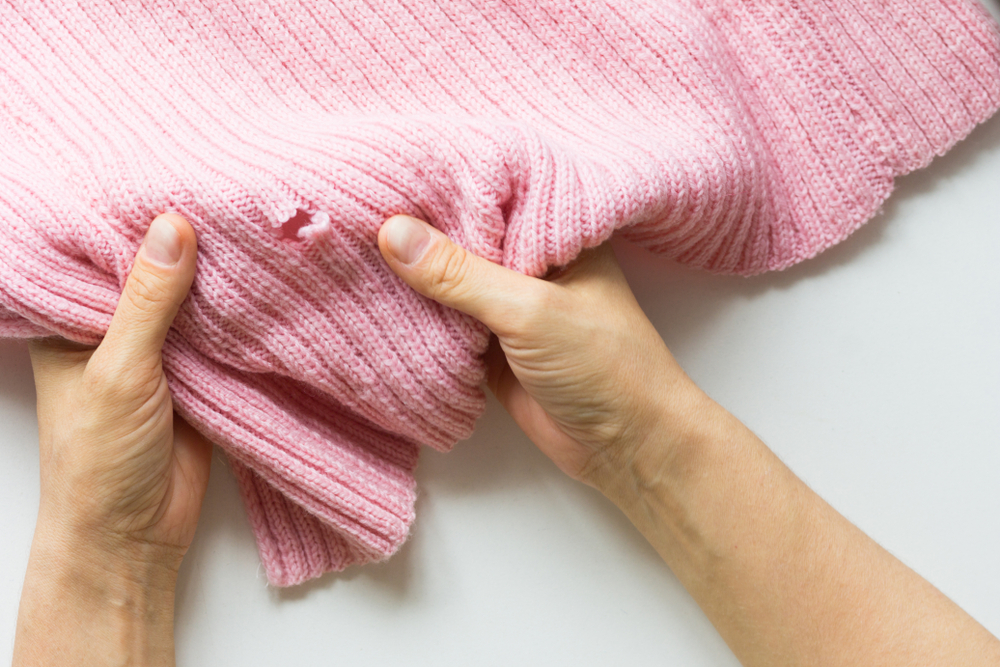
Finding holes in a favourite cashmere jumper is upsetting. Finding them across a whole wardrobe is worse. Our heat treatment is designed to stop an infestation at its source, without chemicals and without putting your clothes at risk.
We have spent time developing this service alongside a field biologist, a textile expert and a textile testing laboratory. The result is a careful, controlled process that treats your belongings thoroughly, while protecting even the finest fibres.
Why heat for exterminating moths?
Moths and carpet beetles are hard to eliminate because every stage of their life cycle needs to be dealt with. Sprays and traps often target adults, but it is the larvae that cause the damage, and the eggs that start the cycle again.
Heat reaches all of them. Research on the common clothes moth found that 41°C held for four hours was lethal to all stages of the insect, including eggs. Our treatments are carefully controlled to reach and hold a lethal temperature right through the items being treated.
- Chemical-free – no residues left on clothing, bedding or soft furnishings
- Every life stage – eggs, larvae, pupae and adults
- Reaches hidden areas – heat travels into folds, seams and layers where larvae often hide
- Ready to use – items can be worn or stored as soon as they have cooled
Two ways we can treat your belongings
Every infestation is different, so we offer two heat treatment options. During your free survey, we will recommend the one that suits your home and the items affected.
In-home room heat treatment
Ideal when an infestation affects a large number of items, or things that are difficult to move.
We gather all the affected clothes, textiles and soft furnishings into a single room of your property. That room is then sealed and gradually brought up to the target temperature, which is held long enough to penetrate every item. Our team monitors the temperature throughout, so the whole room is treated evenly.
Because everything is treated together, in one place, it can be a highly effective way to deal with a widespread problem in a single visit.
Garment collection and treatment service
Ideal for smaller numbers of treasured or delicate garments.
We collect your at-risk items, carefully stored and labelled, and take them to our facility for treatment in our specially adapted heat tent. We aim to return treated clothes within 24 hours, depending on your postcode.
This service is currently available in South West London postcodes only.
Is heat treatment safe for my clothes?
Protecting your clothes is as important to us as getting rid of the pests. Our testing with the textile laboratory has shown that, at the required temperature, lambswool and cashmere were unaffected in terms of shrinkage and colour fastness. We have since successfully treated a number of clients’ treasured garments, mostly cashmere and lambswool, and we continue to test other sensitive fibres.
With guidance from our textile expert, garments are arranged so that heat reaches them all the way through. They are never handled, stacked or positioned in a way that could stretch, crush or damage them, even the finest of fibres.
If you have particularly delicate, valuable or vintage pieces, just let us know. We will talk you through the options before any treatment begins.
Get a free quote or book a survey
Fill in the form or call 020 3143 1448 to arrange your free quote or site survey.
How the process works
- Free survey – A BPCA-trained Pest Control Officer or Field Biologist identifies the pest, assesses the extent of the problem and recommends the right treatment.
- Preparation – We explain exactly what to gather and what to set aside. Some heat-sensitive items may need to be removed from the treatment area.
- Treatment – Your items are heat treated either in a dedicated room of your home or at our facility.
- Cooling and return – Items are allowed to cool gradually before being returned or put away.
- Aftercare – We give practical advice on storage and prevention to help stop moths returning.
Combining heat with other treatments
Heat destroys the insects in the items treated, but it does not leave behind any ongoing protection. Moths and carpet beetles can also live in carpets, floorboards, wardrobes and soft furnishings elsewhere in the home.
That is why we may recommend combining heat treatment with other services, such as targeted treatment of affected rooms, professional cleaning, or a pheromone monitoring programme. Your survey will tell us what is needed.
Frequently asked questions
Does heat treatment kill moth eggs?
Yes. When the correct temperature is reached and held for long enough, heat can destroy every life stage, including eggs. This is one of the main advantages of heat over many other methods.
Will heat treatment shrink my cashmere?
In our laboratory testing, lambswool and cashmere showed no shrinkage or loss of colour at the treatment temperature. We continue to test other fibres and will always advise you on specific items.
Does heat treatment work on carpet beetles?
Yes. Carpet beetle larvae feed on many of the same natural fibres as clothes moths, and heat can be an effective way to treat affected items.
Which option is right for me?
Room treatment usually suits larger infestations or bulky items. Our collection service suits smaller numbers of garments. We will recommend the best option at your free survey.
Is it safe for my family and pets?
The treatment uses heat rather than chemicals, so no residues are left behind. The treatment room is kept closed while it is being heated.
How long does it take?
Room treatments are typically completed in one visit. Garments sent to our facility are usually returned within 24 hours, depending on your postcode.
